
Scoliosis is a condition that causes a sideways curve in a child’s spine. While it may start small and seem harmless, scoliosis can worsen as a child grows, especially if not diagnosed by the Pediatric Orthopaedist in Abu Dhabi. As a parent or caregiver, being able to recognize the early signs of scoliosis is important. The earlier scoliosis is detected, the better the chances of managing it without major complications.
In this blog, we’ll explain what pediatric scoliosis is, what signs to look out for, and how trusted pediatric orthopedic doctors in Abu Dhabi can help your child stay healthy and active.
What Is Pediatric Scoliosis?
Pediatric scoliosis involves any type of scoliosis that is diagnosed in children and teens. It usually develops in school-age children between 10 and 15 years old, though it can also appear earlier.
The spine naturally has curves when viewed from the side. But with scoliosis, the spine curves abnormally when viewed from the back, often taking a “C” or “S” shape. This curvature can be mild or severe, and in some cases, it can affect a child’s posture, breathing, and overall quality of life.
Types of Pediatric Scoliosis
a) Idiopathic Scoliosis: The most common form with an unknown exact cause, but it’s often seen in otherwise healthy children, especially during growth.
b) Congenital Scoliosis: Caused by a spinal defect that is present at birth.
c) Neuromuscular Scoliosis: Occurs in children with conditions like cerebral palsy, muscular dystrophy, or spina bifida.
d) Syndromic Scoliosis: Linked to syndromes such as Marfan or Ehlers-Danlos Syndrome.
Most cases are idiopathic, which means there is no known reason for the spinal curve. However, it is not caused by poor posture, heavy school bags, or lack of exercise.
Why Does Early Detection Matter in Pediatric Scoliosis?
Scoliosis often develops gradually, without causing pain or visible symptoms in the early stages. That’s why it’s so important for parents, teachers, and pediatricians to be on the lookout for early warning signs.
When scoliosis is diagnosed early, Pediatric Orthopedic Surgeon or doctor can monitor the curve as your child grows and step in with treatment when needed. This helps prevent the curve from worsening and reduces the chance of needing surgery later on.
Early Signs of Scoliosis in Children
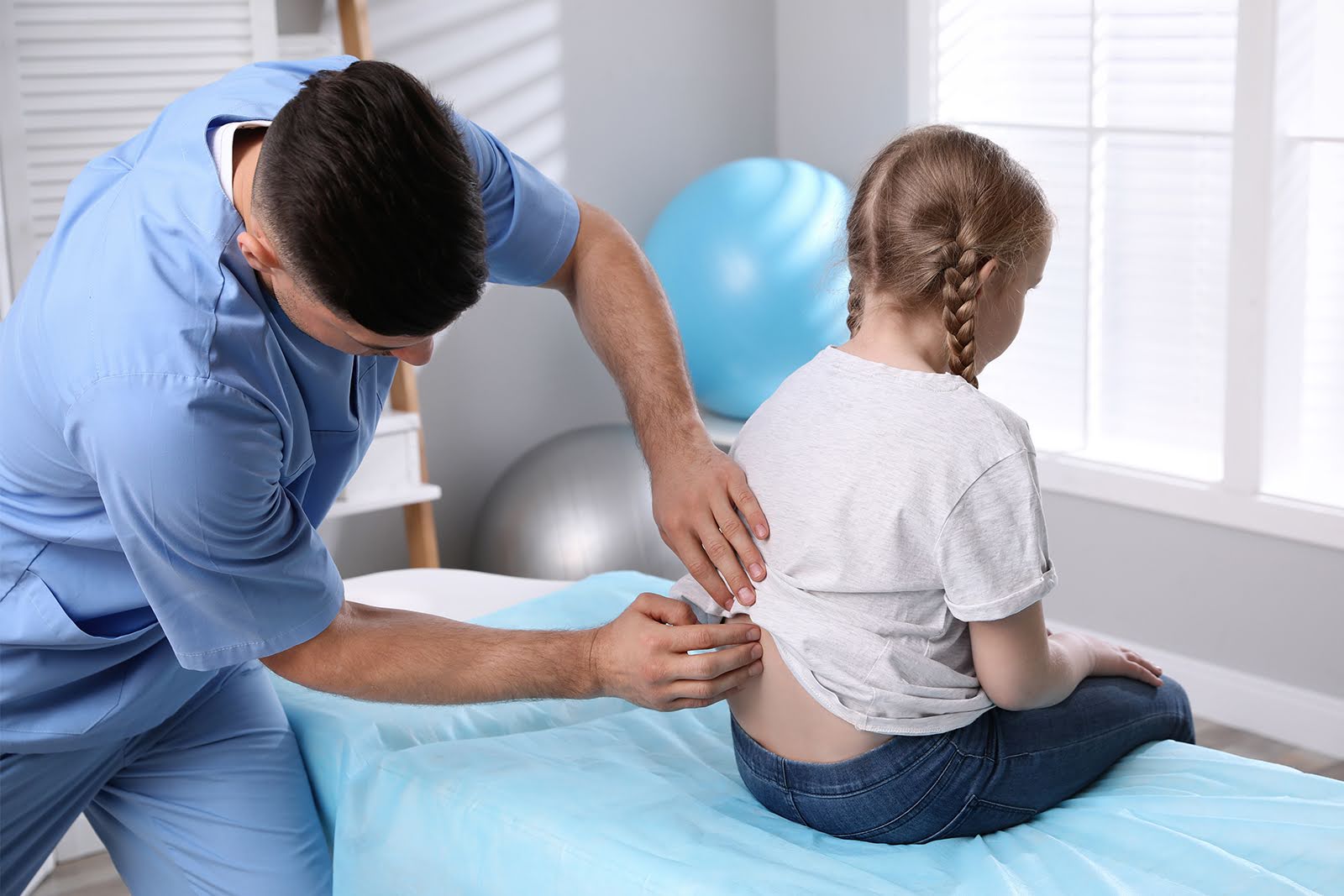
Many children with scoliosis appear perfectly healthy and don’t complain of any symptoms. But as a parent, here are some signs recommended by Pediatric Orthopedist in Abu Dhabi to watch out for:
a) Uneven Shoulders: One shoulder may appear higher than the other, which is often one of the first visible signs.
b) One Shoulder Blade Sticks Out More: You may notice that one shoulder blade is more prominent or appears to stick out when your child stands straight.
c) Tilted Head or Body Leaning to One Side: If your child’s head doesn’t appear centered above the pelvis or their body leans to one side, it may indicate a spinal curve.
d) Uneven Hips: One hip may appear higher than the other, or pants may fit unevenly.
e) Rib Cage Prominence: You might see one side of the rib cage sticking out more, especially when your child bends forward.
f) Difficulty Standing Up Straight: If your child seems to slouch or struggles to stand straight even with reminders, it could be due to spinal curvature.
g) Clothes Don’t Fit Evenly: Shirts, dresses, or pants may hang unevenly or twist to one side because of the curve.
Treatment Options for Pediatric Scoliosis
Treatment depends on several factors, including the child’s age, the degree of the curve, and how quickly they are growing.
a) Observation
If the curve is mild and the child is still growing, the doctor may recommend regular check-ups every 4-6 months to monitor the curve.
b) Bracing
For moderate curves in growing children, a back brace may be advised by doctors specializing in Pediatric Orthopedic in Abu Dhabi. Bracing doesn’t cure scoliosis, but it can stop the curve from getting worse. Children are usually asked to wear the brace for 16-23 hours a day.
c) Physical Therapy
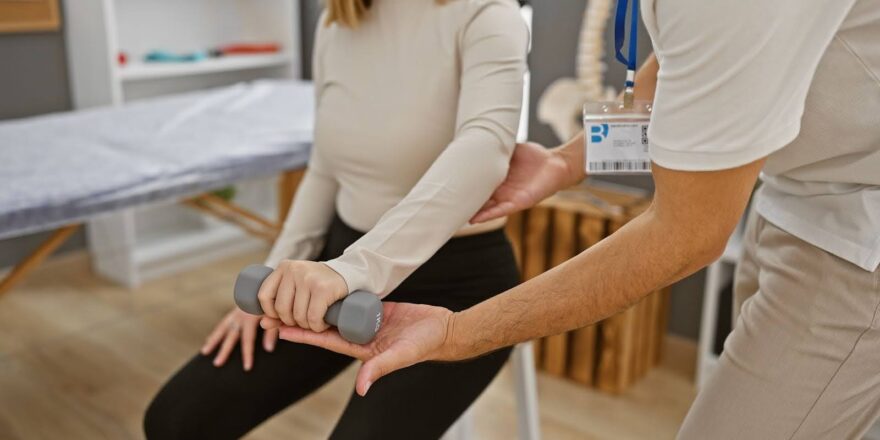
Some children benefit from exercises that strengthen the back muscles and improve posture and flexibility.
d) Surgery
Surgery is usually recommended for severe curves (usually over 45–50 degrees) or when scoliosis worsens despite bracing. The most common procedure is spinal fusion, where vertebrae are joined together to correct and stabilize the spine.
Hence, scoliosis doesn’t always come with clear symptoms, which is why early detection from the specialists at the best Hospital in Khalifa City is key. As a parent or caregiver in Abu Dhabi, knowing what to look for and taking action when needed can make a big difference in your child’s long-term health.
If you notice any warning signs, don’t wait. Schedule an evaluation with a trusted Pediatric Orthopedic Doctor in Abu Dhabi. With expert guidance, scoliosis can be managed effectively, allowing your child to grow up strong, confident, and active.
Specialized Scoliosis Care at Tarmeem Orthopedic and Spine Specialty Hospital in Abu Dhabi!
At Tarmeem Orthopedic and Spine Specialty Hospital in Abu Dhabi, families have access to highly experienced pediatric orthopedic specialists who focus on early detection, accurate diagnosis, and effective treatment of scoliosis in children.
Using advanced imaging, modern bracing techniques, and minimally invasive surgical options, the team of doctors at the best hospital in Abu Dhabi offers comprehensive and personalized care tailored to each child’s needs. Our child-friendly environment and multidisciplinary approach ensure that both the physical and emotional aspects of scoliosis are addressed, helping young patients maintain a healthy and active lifestyle with confidence.
Schedule a consultation at Tarmeem today and take the first step toward expert scoliosis care for your child.